The "Thermos Syndrome" in South Wales
1950s terraced houses in South Wales were built with heavy masonry, brick and slate, specifically designed to trap warmth against wet, windy Welsh winters. When a modern heatwave hits, that same thermal mass absorbs the sun all day and acts like a giant radiator at night. In a mid-terrace property, the lack of cross-ventilation makes flushing out that heat nearly impossible. The building trade often calls this the "Thermos Syndrome."
Who feels the heat worst
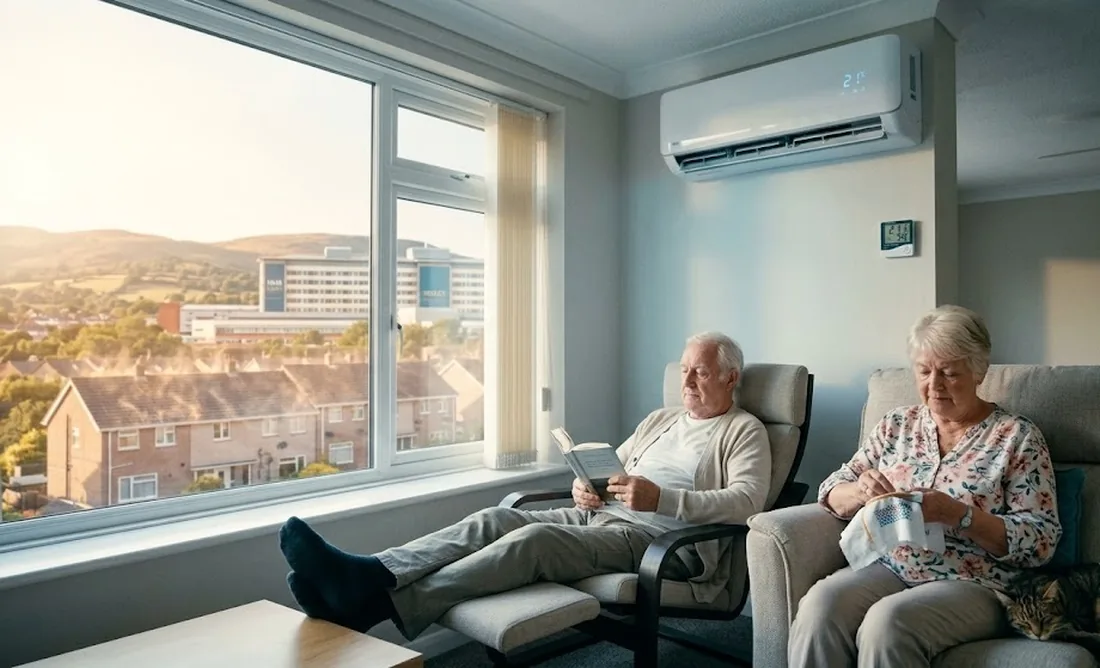
The health impacts of trapped indoor heat are real, and they fall hardest on the people least able to cope. Air conditioning offers a genuine, practical intervention.
- Hearts and heat-related illness. Extreme heat forces the cardiovascular system to work much harder, pumping blood to the skin's surface to cool the body. In summer 2024, there were over 1,300 heat-associated excess deaths in England alone, primarily affecting people over 65 or those with underlying heart, lung and kidney conditions. A cooled room provides a physical refuge for vulnerable family members.
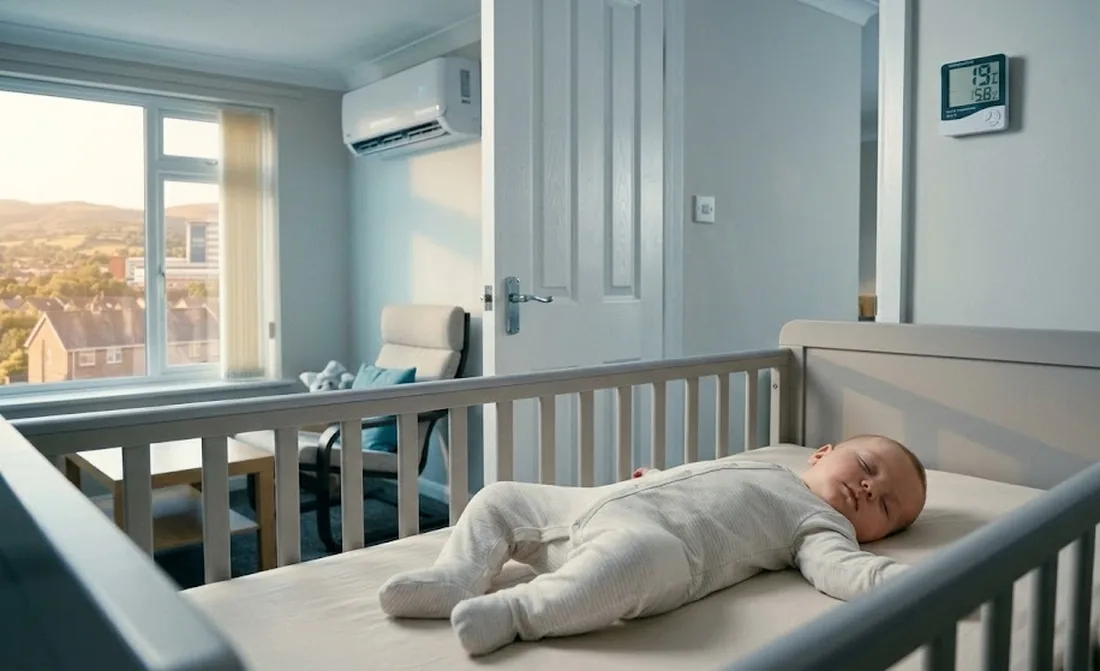
- Babies and safe sleep. The Lullaby Trust and the NHS advise keeping a baby's room between 16 to 20°C to reduce the risk of Sudden Infant Death Syndrome (SIDS). In a Welsh terrace during a heatwave, hitting that target is often impossible without active cooling.
- Hay fever and asthma. Modern split-unit air conditioners don't just cool the air, they filter it, stripping out pollen, dust mites and urban pollution such as vehicle particulates. For hay fever and asthma sufferers, an air-conditioned room becomes a clean-air sanctuary.
- Sleep and next-day focus. Restorative deep sleep needs your core body temperature to drop slightly. A bedroom lingering at 25°C actively prevents this, leading to fragmented sleep, elevated stress hormones and noticeably reduced concentration the following day.
Why active cooling, not just a fan
A fan moves air and evaporates sweat, which makes you feel cooler, but it doesn't lower the room temperature or remove humidity. On a muggy Welsh night when the bedroom simply won't drop below the mid-20s, that difference is the difference between sleeping and not. We cover the numbers in detail in the running-costs guide. If you want to see the measured evidence for how Welsh summers are changing, the climate evidence guide lays out what the Met Office and Senedd Research have actually recorded.