What it actually costs.
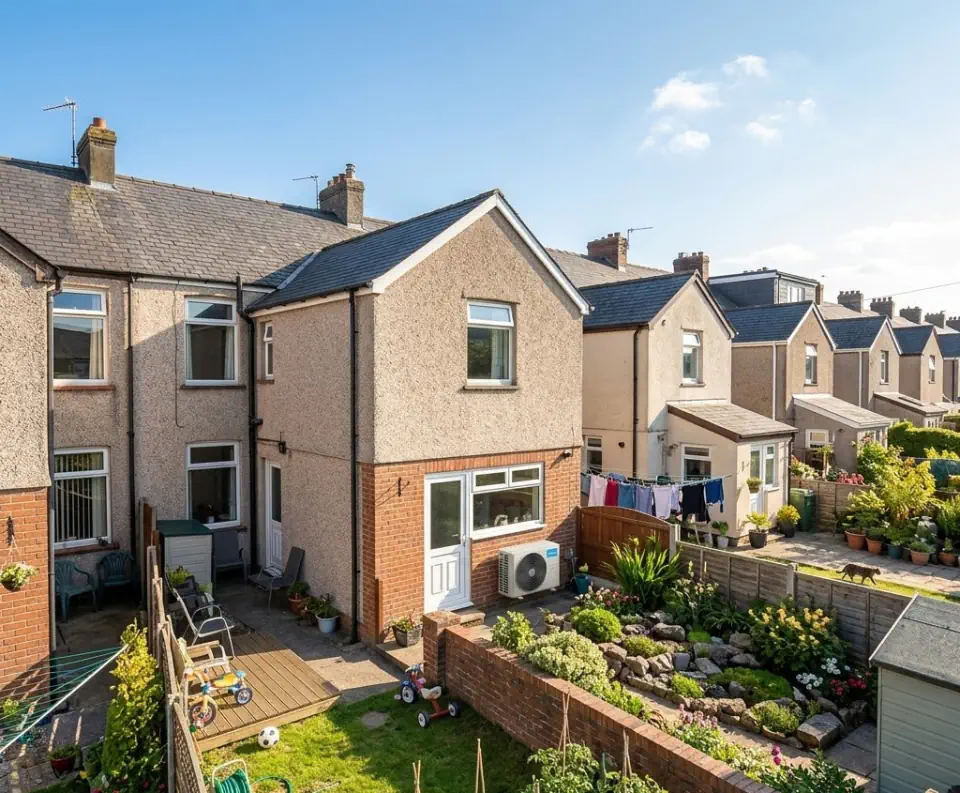
One indoor unit, in the room that overheats worst, is £1,500 for a typical terraced house paid up front, or £1,925 spread over 12 months at no extra interest. The room itself is £1,700, a terrace adds £180 for access and a medium-sized room adds £45 for materials, which is why the twelve-month figure is £1,925 rather than £1,700. Those additions cover access and materials, not the spreading of payments: spreading costs you nothing extra. A detached house adds £90 instead, a semi £130 and a flat £230, with £25 to £65 for the size of each room, because it is the access and the pipework that change and not the equipment. Two rooms on a multi-split system is £2,718 paid up front, or £3,534 over 12 months.
For comparison, the Energy Saving Trust puts the cost of an air-to-air heat pump for a single room at around £1,900. Our up-front price sits comfortably under that, and you can build your own quote in about two minutes to see the number for your own rooms rather than ours.
A household with a newborn or a pensioner takes another 10% off the room cost. That is £170 here, so one room in a terrace over 12 months comes to £1,755 rather than £1,925. That discount applies automatically once you tell us; it is not something you need to ask for separately.
You probably do not need a unit in every room.
Most people picture air conditioning as one box per room, and that assumption is what makes the whole job feel unaffordable. In a two up two down, a single unit in the room that actually overheats, usually the back bedroom or the through lounge, does most of the work. Warm air moves around a house, and a cool room with the door open pulls the temperature down next door more than people expect.
We recommend one unit because it is what actually works in a two up two down. That it also costs less is a bonus, not the sales pitch.
What a multi-split actually is.
Sometimes two rooms genuinely need treating, usually a bedroom and a living room in a house where both bake in summer. The answer there is a multi-split: one outdoor condenser feeding two or more indoor units, rather than two separate systems bolted to the same wall. It looks tidier, costs less than fitting two single systems, and only needs one route in and out of the house for the pipework and cabling.
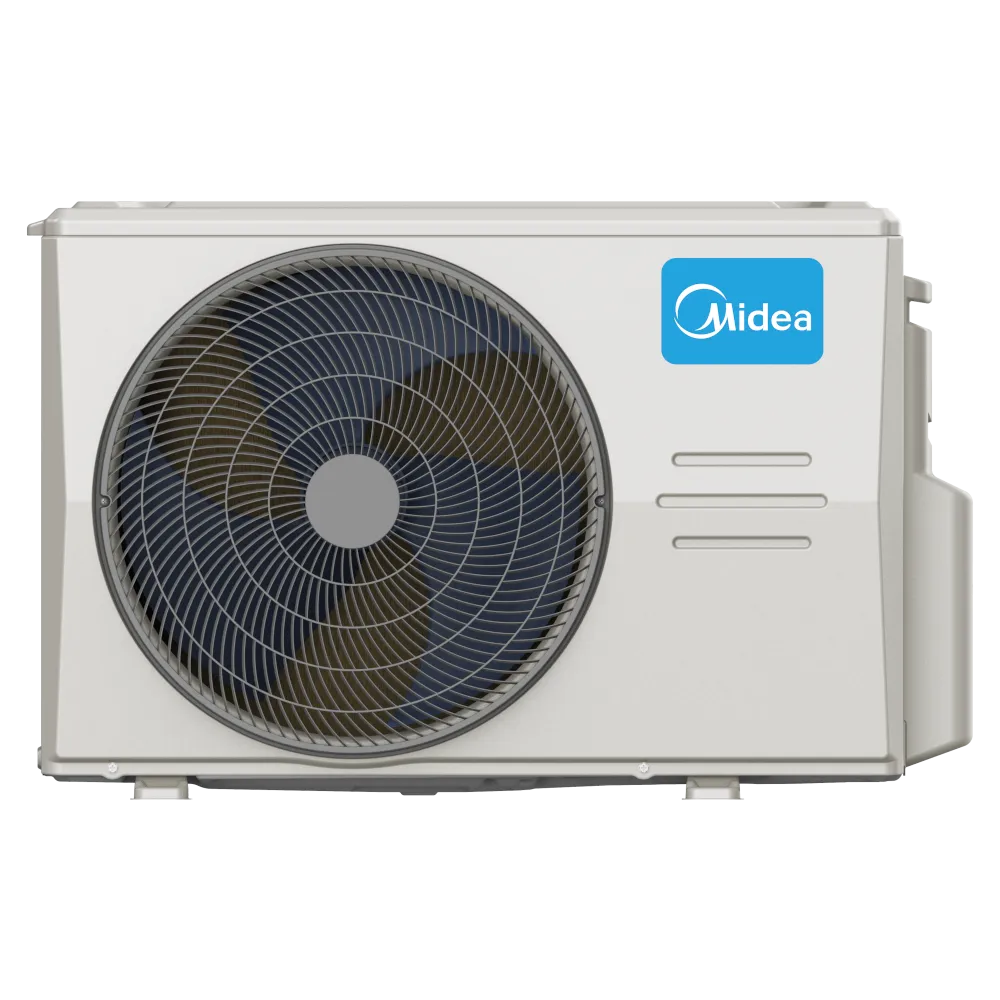
A two-room multi-split in a terraced house is £2,718 paid up front, or £3,534 spread over 12 months. That already includes the multi-room discount. The second room takes 4% off the whole job rather than 4% off that one room, and it rises the more rooms you add, up to a maximum of 20%.
What a mid-terrace job actually involves.
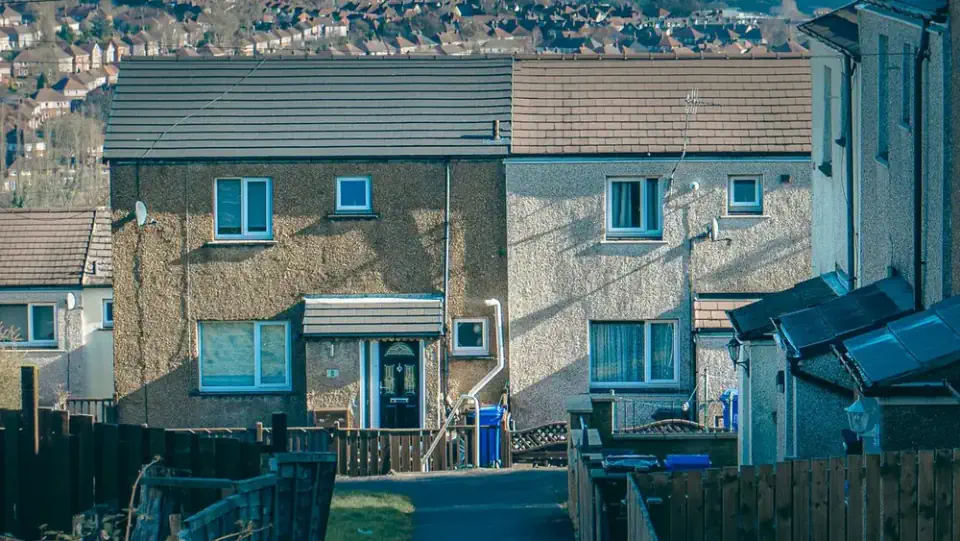
This is not a niche question. Just over a quarter of households in Wales, 358,000 of them, live in terraced properties, and a large share of what we fit in Cwmbran, Pontypool and the streets around them is exactly this shape: two up two down, no side return, a small rear garden. We do not treat that as an awkward case. It is our normal case.
The outdoor unit usually goes on the rear wall at ground floor level, close to where the indoor unit sits, so the pipe run stays short. Where there is no side access, the pipe goes out through a small drilled hole rather than round the side of the house, so a missing side return rarely changes the job. We wire the unit back to the consumer unit ourselves as part of the fit. On some older properties the consumer unit needs upgrading to take the extra circuit, which is a fixed £750 for parts and certified labour, and we will tell you at the survey if yours is one of them.
A single room fit takes most engineers a single working day. We will confirm the actual time once we have surveyed your house, because a straightforward rear wall job and one with a longer pipe run are not quite the same length of day.
Planning permission is worth folding into the cost conversation, because getting it wrong is expensive in a different way. Under the rules that govern this in Wales, a reversible unit that heats as well as it cools can qualify as permitted development, while a cooling-only unit cannot and normally needs an application. Every system we fit is reversible, so that is one cost you will not run into with us. Qualifying is not automatic though: limits on the size, siting and number of units still apply, and conservation areas and listed buildings are tighter again, which is part of what we check at the survey. Noise is the other question everyone on a terraced street asks before they ask about money. To qualify, the sound has to come out at or below 37.0 dB(A) one metre outside a neighbour's habitable room window, which we work out by calculation from the unit's rated output rather than measure on the day, and getting the siting right the first time is part of what you are paying for. Both of these are covered properly in our guide to planning permission.
From a phone call to a cool room.
The order of events is the same for every terrace we fit, and knowing it up front takes some of the mystery out of the price. A free survey comes first, usually within a few days of asking, and that is where we confirm the room, the siting, the planning position and the noise calculation properly, on your actual house rather than a general one. You leave that visit with a fixed price, not an estimate that might move later.
Once you accept, the fitting date is booked in around your diary. On the day, the engineer dust-sheets the work area, runs the pipe and the electrics, mounts both halves of the unit, and tests it properly before handing it back to you. A single room is usually done in the one visit, start to finish, and there is nothing left half done for a second appointment.
What is included, and what changes the price.
Every quote is built from the same handful of things, worth knowing so a price never feels arbitrary. The room cost is £1,700 each, with a discount off the whole job for every room after the first. Access is then added as a fixed amount depending on the property: £90 for a detached house, £130 for a semi, £180 for a terrace and £230 for a flat, because of how the equipment has to get through and around it. The size of each room adds a little more, between £25 and £65, for the longer pipe, cable and trunking runs a bigger room takes. A new consumer unit, if yours needs one, is £750 on top and is not discounted, because there is very little margin in the parts and the certified labour it takes.
On top of that, a household with a newborn or a pensioner gets 10% off as standard, and paying up front rather than spreading the cost takes a further 25% off. Both of those come off the room cost before the access and materials charges are added, which is why one room in a terrace drops by £425 rather than by a quarter of the whole £1,925. Spreading it adds no interest and no fees for up to 12 months, though you do give up the 25% by not paying up front, so it comes down to which of the two suits your household better.
None of that is the same as a cheap quote from someone working outside the rules. An installer legally needs F-Gas company certification to touch this equipment at all, and a price that looks too good sometimes has that missing entirely. We are F-Gas and REFCOM registered, and that is not a cost we have shaved to get near a lower number.
Why an older Welsh terrace is not a problem.
There is a common assumption that heat pump technology, which is what an air conditioner actually is, does not suit an old house. The opposite has been measured. A government-backed trial installed 742 heat pumps around the UK and monitored 428 air source systems through a full heating season. Homes built before 1919 recorded the highest median efficiency of any age band, at 2.90 against 2.78 across the whole sample, which is nearly three units of heat for every unit of electricity. The researchers are careful to say the gap between the age bands was not statistically significant, and that is really the more useful finding for anyone in an old terrace: the age of the house did not predict how well the heat pump performed. Older housing is simply not the poor candidate people expect it to be.
Solid brick Welsh terraces hold their temperature well in both directions, which is part of why the data lands the way it does. Once a unit has brought a room to temperature, that heat in winter, or that cool in summer, does not leak straight back out through thin modern walls, because there are none here to leak through.
Getting your own number.
Everything above is a fair general price. Your own number depends on your rooms, your property and how you would rather pay, and the fastest way to see it is to build it yourself. Get an instant estimate for your own rooms and it takes about two minutes. If you would rather someone came and looked properly, book a free survey and we will measure up properly, confirm the siting, and give you a fixed price before anything is agreed.
This page is about what it costs to fit the system. What it actually costs to run once it is fitted is a different question, and we have answered that one separately, with a calculator that works it out on your own electricity tariff. If a portable is what you are actually weighing this against, we have compared the two honestly in portable air conditioning versus a fitted split. The coverage map shows whether you are in our patch.